Table of Contents
- Why I stopped stacking streaming subscriptions
- What makes an IPTV service good for movies
- Top IPTV features movie lovers should look for
- How VOD libraries compare to mainstream streaming apps
- Picture quality and playback performance
- Pricing breakdown for movie-focused IPTV services
- Final thoughts
There was a point about two years ago when I sat down and added up every streaming subscription I was paying for. Netflix. Hulu. HBO Max. Amazon Prime. Disney Plus. Peacock. That monthly total hit somewhere around eighty bucks, and I still could not find half the movies I actually wanted to watch. Living out here in Arizona on a normal salary, that kind of spending for entertainment just did not sit right with me anymore.
That frustration is exactly what pushed me toward IPTV for movies. And after testing multiple services over the past couple of years, I can tell you there is a better way to do this. You just need to know what to look for and which providers actually deliver on their promises.
Why I stopped stacking streaming subscriptions
Here is the thing about mainstream streaming apps that nobody likes to talk about. They split content on purpose. One studio puts its movies on one platform. Another studio locks its catalog behind a different subscription. Before you know it, you need four or five apps just to have a decent selection on movie night.
And even then, movies rotate out. I cannot tell you how many times I have searched for a specific film on Netflix only to find out it left the platform two weeks ago. Then you either rent it for another five bucks or go hunting across other apps hoping someone still has it.
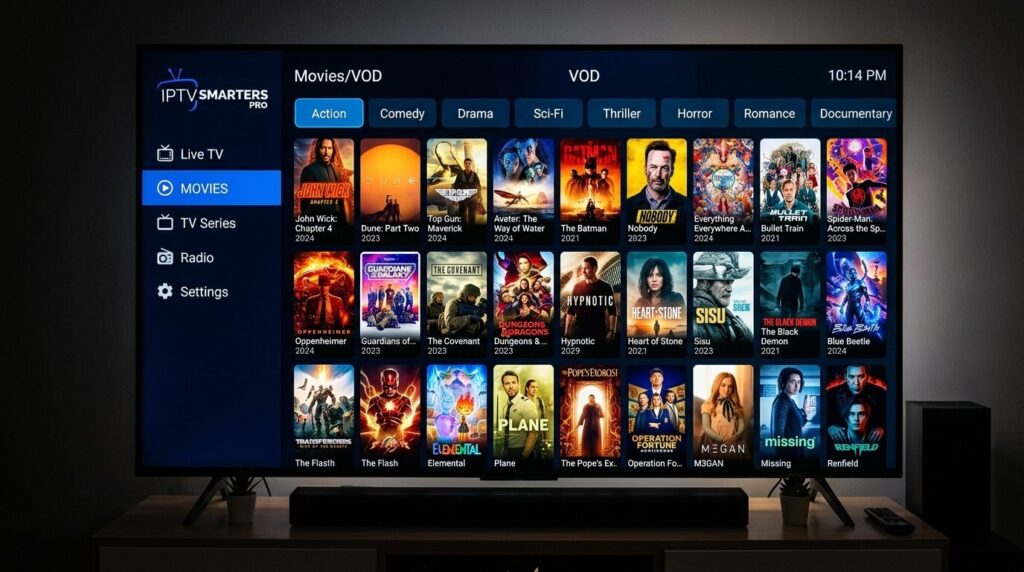
IPTV services approach this differently. Most providers bundle a massive video on demand library — we are talking thousands of titles across every genre — into one single subscription. New releases, older classics, action, drama, comedy, horror, documentaries, and yes even those westerns I am a sucker for. All in one place. One login. One monthly payment.
That simplicity alone was enough to get my attention. But what kept me around was the depth of content and the price.
What makes an IPTV service good for movies
Not every IPTV provider is built the same, and some are clearly better for movies than others. After testing a handful of services over the past couple years, I have narrowed down what actually matters when you are choosing a provider specifically for film.
Library size matters but so does library quality. Some providers advertise ten thousand movies in their on-demand section, but when you start browsing, half of them are low-budget films you have never heard of and never will again. The best providers balance quantity with quality. You want a service that carries major studio releases alongside a solid catalog of older titles across multiple genres.
Update frequency is a big deal. A good movie-focused IPTV service adds new content regularly. If the newest films in the library are from six months ago, that is a red flag. The best providers update their VOD sections weekly, sometimes even faster than that.
Organization and search functionality. This sounds minor but trust me it is not. When you have thousands of movies available, being able to search by title, genre, year, or even actor makes a huge difference. A cluttered or poorly organized interface will frustrate you faster than a slow drive on the I-10 during rush hour.
Top IPTV features movie lovers should look for
Beyond the basics, there are a few specific features that separate a decent movie experience from a great one. These are the things I personally look for whenever I test a new service.
Favorites and watchlist. Being able to save movies you want to watch later sounds simple, but not every IPTV app supports it well. A proper favorites system lets you build your own personal queue so you do not have to dig through thousands of titles every time you sit down.
Multi-device support. Sometimes I start a movie on the living room TV and want to finish it on my tablet in bed. Or maybe I am traveling and want to watch something on my phone during a layover at Sky Harbor. A good provider lets you use multiple devices under one subscription, and the best ones allow simultaneous connections so your family can watch something different in another room.
Catch-up and replay. Some IPTV services offer catch-up functionality on their movie channels. If a film aired on a live channel earlier in the day and you missed it, catch-up lets you go back and start it from the beginning. Not every provider includes this, but the ones that do earn extra points in my book.
Subtitles and audio options. This one gets overlooked constantly. If you watch international films or just prefer having subtitles on, you want a provider that supports multiple subtitle languages and audio tracks. Most quality services include this but it is worth checking before you commit.
How VOD libraries compare to mainstream streaming apps
I want to be straight with you here because I think honesty matters more than hype. Mainstream streaming apps like Netflix and Disney Plus have one advantage that most IPTV services cannot match — original content. Shows and movies produced exclusively for those platforms are not going to show up in an IPTV library through official licensing deals.
That said, where IPTV pulls ahead is in sheer volume and variety. A single IPTV subscription can give you access to a VOD catalog that dwarfs what any individual streaming app offers. We are talking about a range that covers Hollywood blockbusters, independent films, international cinema, classic movies from every decade, and new releases that show up surprisingly fast.
The other advantage is consolidation. Instead of jumping between apps trying to remember which service has which movie, everything lives in one place. One interface. One search bar. One remote. For someone like me who just wants to sit down and find something to watch without spending twenty minutes deciding which app to open first, that alone is worth it.
Picture quality and playback performance
Let me address something that worried me early on — picture quality. When I first heard about IPTV, I assumed the video quality would be rough. Grainy streams, constant buffering, the kind of experience that makes you want to throw the remote across the room.
I was wrong. At least with the better providers.
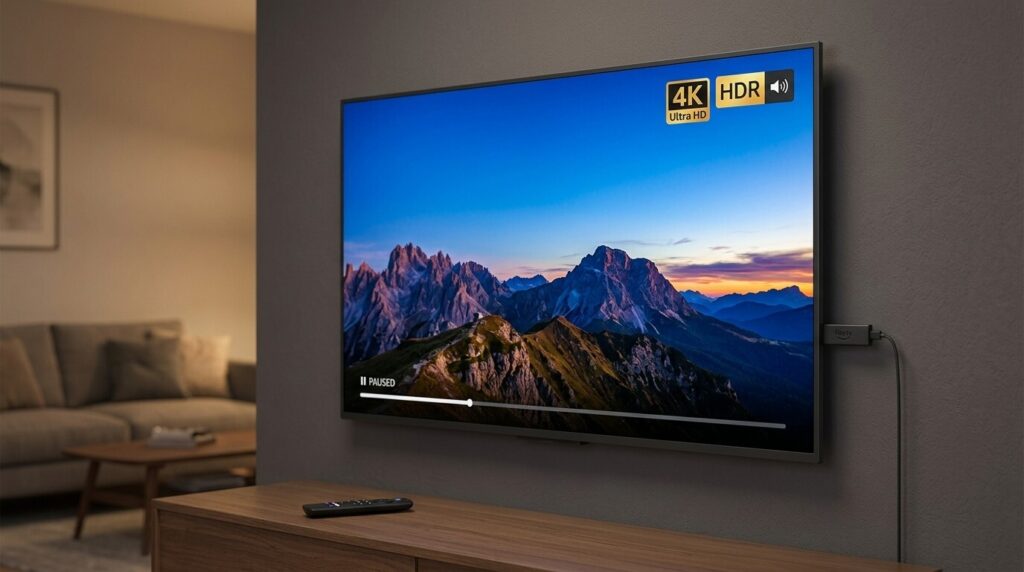
Most reputable IPTV services today stream movies in full HD, and many offer 4K content for devices that support it. The quality honestly rivals what you get from Netflix or any other mainstream platform. Some providers even support HDR, which makes a noticeable difference if you have a TV that handles it.
Now here is the catch. Your experience depends heavily on your internet connection. If you are running on slow or unstable internet, no IPTV service in the world is going to look good. For standard HD, you want at least 15 Mbps. For 4K, aim for 25 Mbps or higher. And if other people in your household are using the internet at the same time, factor that in too.
A wired ethernet connection will almost always perform better than Wi-Fi for streaming. If running a cable to your TV is not practical, at least make sure your router is relatively close and not buried behind furniture. I learned that one the hard way when my Firestick kept buffering and it turned out my router was sitting inside a closed cabinet in another room.
Pricing breakdown for movie-focused IPTV services
This is where IPTV really shines, especially for folks who are tired of watching their bank account drain every month just to watch movies at home.
Most IPTV subscriptions fall somewhere between ten and twenty-five dollars per month. That single payment typically includes live TV channels, a full VOD library with thousands of movies, and often catch-up or time-shifted viewing as well.
Compare that to the mainstream streaming stack. Here is a rough look at what a lot of people are paying right now.
Netflix standard plan runs around fifteen dollars. Hulu with no ads is about eighteen. HBO Max is around sixteen. Disney Plus is fourteen. Amazon Prime Video is about nine if you separate it from the full Prime membership. Add those up and you are looking at seventy-two dollars a month, and that is without live TV.
A single IPTV subscription at fifteen to twenty dollars a month gives you live channels, a VOD library that covers much of the same content spread across those apps, and usually a lot more on top of that. The savings are real and they add up fast over the course of a year.
Now I want to be clear about something. The cheapest option is not always the best option. Providers charging five dollars a month should raise a red flag. Quality servers, reliable uptime, and regularly updated content libraries cost money to maintain. If a deal looks too good to be true, it usually is. Aim for providers in that ten to twenty-five dollar range who have solid reputations and verifiable user reviews.
Finding the right IPTV service for movies comes down to knowing what matters — a deep and well-organized VOD library, reliable playback quality, regular content updates, and a price that does not make you wince every month. Once you dial in those priorities, the decision gets a lot easier.
If you are curious about how IPTV stacks up against your current cable or streaming setup on a dollar-for-dollar basis, I put together a detailed comparison of IPTV vs cable vs streaming apps that lays out the real numbers side by side. And for a broader look at everything from setup to legality and provider options, the complete guide to IPTV service ties it all together in one place.
Take your time picking a provider. Test it out. Watch a few movies on a Friday night and see how it feels. I think you will be pretty surprised at how much content you get for so little — and how much simpler movie night becomes when everything lives under one roof.